Target Keywords: TM52 vs WC Carbide, High Manganese Steel Compatibility, Thermal Conductivity, Steel Bonded Carbide.
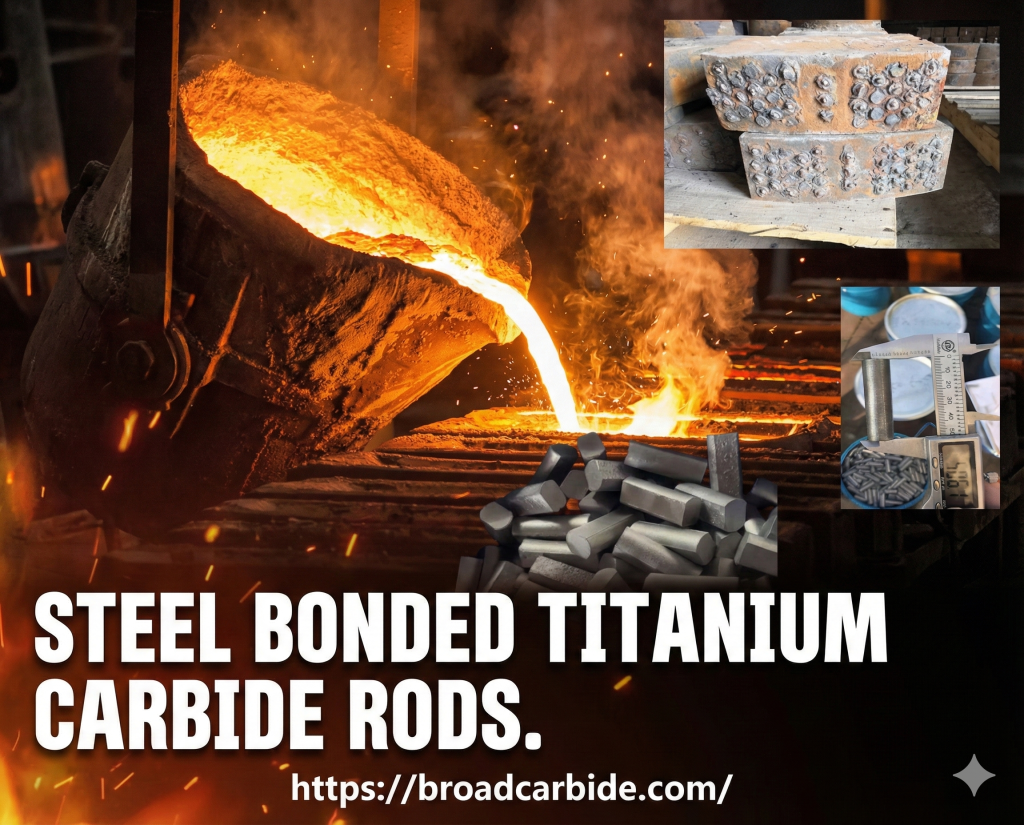
When you’re reinforcing high-manganese steel, you have two choices: Tungsten Carbide (WC-Co) or Steel-Bonded Titanium Carbide (TiC). WC-Co is hard, sure. But Broadcarbide’s TM52 is the superior choice for casting. Why? Because unlike Tungsten Carbide, TM52 shares the same “DNA” as your steel base.
Section 1: Dealing with Heat
Composite casting is a thermal shock event. If your materials react differently to heat, they pull apart.
Matched Conductivity: TM52 has a thermal conductivity of 12.979 W/(m·℃)—almost identical to high-manganese steel.
Harmony in Cooling: This means they expand and contract together. WC-Co fights the steel as it cools, leading to cracks. TM52 moves with the steel, minimizing thermal stress.
Section 2: The “Manganese Gene”
We like to say TM52 and High-Manganese Steel share a “gene”.
No Rejection: Since TM52 uses a steel binder, there’s no metallurgical rejection when the molten steel hits it.
Dense Bond: You get a tight, gap-free interface without having to overheat the steel, which preserves the carbide’s integrity.
Section 3: Built for Impact
Tungsten Cobalt alloys are notoriously brittle. TM52 behaves differently.
It Gets Tougher: Just like the manganese steel around it, TM52 exhibits work hardening under impact.
- Non-Magnetic: Both materials are non-magnetic, further proving their physical compatibility.
Stop sighting physics with mismatched materials. Choose TM52—the material designed to bond with your steel, not reject it.